 By
By Service has become a four-letter word.
Would you rather talk to a person or file a ticket? That simple question says more about modern customer service than most mission statements ever will. Particularly in the RMIS world, good service matters more than most software feature lists. When a payment can’t be processed due to errors, a data feed is broken, or an OSHA inspector is waiting impatiently for you to generate an OSHA 300 log, no one wants a case number—they want a person who can fix the problem. NOW. We’ve all been there: you have a problem, you reach out for help, and instead of a human being, you’re handed a form, a portal, or a case number. And then you sit and wait and wait and wait …watching the clock tick.
What used to be an easy breezy call to one person is now a portal, a workflow, and a ticket in a queue. Companies call this efficiency. What it really creates is distance—distance between the customer and the people who are supposed to help them. And distance doesn’t improve service; in fact it reduces accountability.
I’m not even asking for great service. I’m asking for good service.
Great service requires proactivity and a willingness to exceed expectations. Good service requires that someone listens, has the ability to act, and actually solves the problem. I recently came across a side-by-side image of good service versus bad service, and it was striking how closely it matched my definition. Good service is responsive, empowered, and human. Bad service hides behind process and policy. We all want great service, accept good service and tolerate painful bad service, if that’s the only option. Bad service drives customers away (just do a search of Yelp or Google reviews).
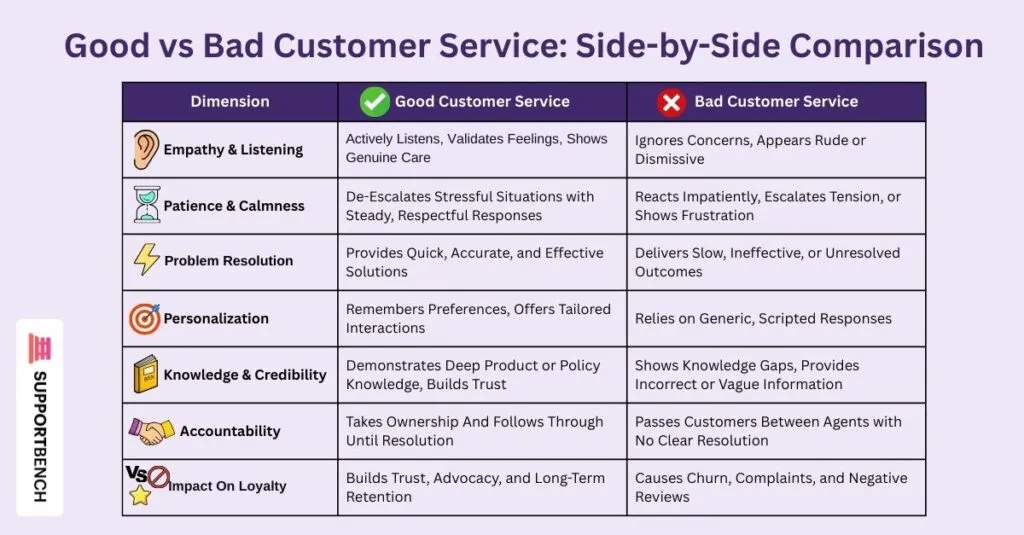
Here’s the reality that RMIS vendors don’t want to hear: Most risk managers would rather talk to a knowledgeable support person (someone who knows the product and knows the system usage and knows at least a smidge about the insurance world) than submit a ticket.
Is it ironic that vendors are not listening to their customers?
Replacing direct communication with ticket systems separates RMIS providers from their clients. And separation is dangerous in a business built on trust, data accuracy, and time-sensitive decisions. When issues are routed instead of owned, problems linger, reporting gets delayed, and confidence erodes.
So why does this happen?
Because RMIS providers face the same pressure as every other business: grow revenue or cut costs. Support teams are expensive, and they’re easy to shrink. Don’t get me wrong – I’m a capitalist. I want vendors to be profitable. But I don’t believe in making money by degrading the very service that keeps clients loyal.
What’s interesting is that customers aren’t the first to notice when this shift happens. Employees are.
Your warning signs: High performers leave when they realize they’re being set up to fail. Turnover rises. Reorganizations multiply. More layers are added, but fewer people are actually empowered to help. There is constant reshuffling that replaces accountability with structure and common sense with process. It will drive clients to look elsewhere. Frankly that’s been great for my business.
Those aren’t signs of a healthy company. They’re signs of an organization that has stopped prioritizing its customers.
And in today’s world, unhappy customers talk—often more loudly and more widely than happy ones.
Good service isn’t about being overly friendly. It’s about being accessible, empowered, and willing to solve problems. When companies forget that, they don’t just lose efficiency—they lose trust.
And once a risk manager stops trusting their RMIS partner, no amount of workflow automation can fix that.